
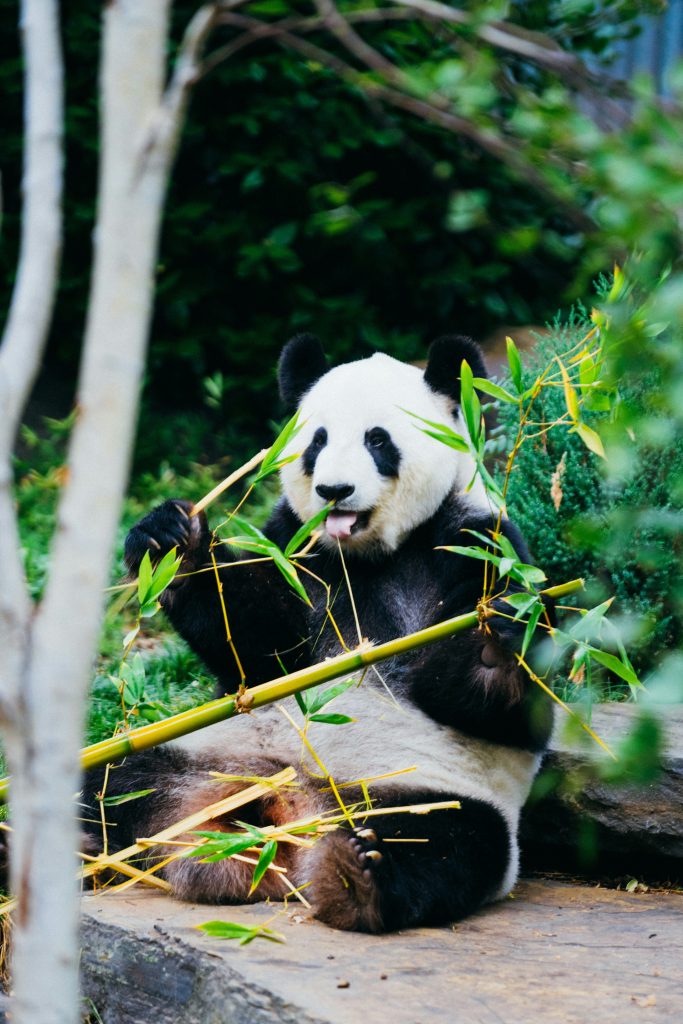
A giant panda leaves a faecal sample in a protected forest in southwestern China. Elsewhere in the same landscape, livestock graze, wild boar and deer move between habitats, and domestic and wild animals encounter overlapping environments. When researchers sequence the viral material contained in those samples, they can begin to see something normally invisible: not simply individual viruses, but patterns of viral sharing across an entire ecosystem.
A study published in Microbiome on 3 September 2026 has done exactly that, using non-invasive faecal metagenomics to investigate the viromes of giant pandas, sympatric wildlife and domestic animals at a wildlife–livestock interface in southwestern China. The scale of what the researchers found is striking: they identified 661,837 DNA viral operational taxonomic units (vOTUs) and 176,031 RNA vOTUs. Yet perhaps the most important result was how much remained unknown — in the RNA virome, 95.93% of the detected vOTUs could not be taxonomically classified. This is the biological “dark matter” increasingly exposed by metagenomic surveillance: sequence evidence telling us that something is present even when existing databases cannot yet tell us precisely what it is.
But the study raises another question that is particularly relevant to The BioChain. As surveillance expands from individual animals to entire ecosystems, how do we preserve the evidence connecting a sequence back to the animal, sample, place, method and analytical process that gave that sequence meaning? Because in metagenomic surveillance, the sequence is only the beginning of the evidence chain.
Traditional infectious-disease surveillance often begins with a relatively simple question: what pathogen is infecting this animal? Metagenomic surveillance allows a much broader one — what viral communities exist across this ecosystem, and how are they related? The distinction matters, because wildlife does not live inside the administrative boundaries used to organise animal health. Protected species interact with sympatric wildlife, wildlife encounters livestock, livestock interacts with people, and domestic animals enter wildlife habitats, with water, food, soil, parasites and arthropods providing further ecological connections. A One Health surveillance system therefore needs to understand biological relationships across an environment rather than treating wildlife, livestock and humans as completely separate surveillance domains.
The new panda study provides a particularly interesting example. Researchers compared viral communities associated with giant pandas, domestic animals and wildlife living within the same broader ecosystem, and found different patterns for DNA and RNA viruses: DNA viral communities showed stronger host association, while the classified RNA virome exhibited broader sharing between host groups. That difference alone illustrates why simply asking whether “the same virus” occurs in two animals can be inadequate — viral ecology is considerably more complicated.
The researchers went further by constructing networks representing patterns of viral sharing, from which they proposed what they describe as a “Source–Bridge–Sink” sharing hypothesis. Domestic animals occupied prominent viral-sharing hub positions, sympatric wild boar and cervids occupied bridge-like positions, and giant pandas were connected to viral lineages shared with both domestic animals and other wildlife. The study also detected vertebrate-associated viral lineages, including members of the Retroviridae and Picornaviridae, in giant panda faecal viromes. Those observations are potentially important for conservation and disease surveillance, but there is an equally important scientific qualification attached to them.
Finding related viral sequences in different hosts does not establish that a virus moved from one of those animals to another, and the authors are explicit about this: their network identifies patterns of viral sharing and generates hypotheses about possible exposure pathways, but it does not establish the direction of transmission. That distinction is crucial. A sequence detected in a faecal sample may represent infection of the host, but depending on the virus and circumstances, metagenomic material can also reflect diet, environmental exposure, parasites or other biological material passing through the gastrointestinal system. Two animals sharing a viral signal therefore does not automatically mean one infected the other — it may mean both encountered the same environmental source, that another species was involved, that the sequence originated from something the animal consumed, or that the observed relationship represents a more complicated ecological pathway. This is precisely why provenance becomes so important.
Imagine that surveillance detects an unusual viral sequence in a giant panda. The sequence itself is useful, but interpreting it requires considerably more information: which animal or host species was sampled, where and when the sample was collected, what type of biological material was involved, how it was collected and preserved, which laboratory received it, how nucleic acid was extracted, which sequencing method was used, how reads were filtered and assembled, which reference databases — and which versions of them — were used for classification, and how the resulting viral sequence was subsequently incorporated into ecological or epidemiological analysis. The evidence chain therefore runs from host, through location, sampling event, biological specimen, sample custody, extraction, sequencing library, sequencing run, raw reads, quality control and assembly, to a vOTU, its taxonomic classification, its place in a host-sharing network, and finally an ecological interpretation. The further downstream we travel, the further the result moves from the original biological event — yet every downstream claim ultimately depends upon that event.
The extraordinary proportion of unclassified RNA viral sequences makes this provenance problem even more interesting. Today, a sequence may be labelled simply as an unclassified RNA vOTU; that does not mean the observation lacks value, only that current reference knowledge is insufficient to classify it. Five years later, databases may contain relatives of that sequence. Ten years later, it could belong to a recognised viral family or lineage. A sequence that appears unremarkable today could consequently become scientifically significant later — but reinterpreting it properly requires more than retaining the raw sequencing file. Researchers need to know what that sequence actually represents: which sample, which host, which location, which sequencing workflow, which original analysis and which subsequent analyses, whether its classification has changed, and whether the relationship between the original biological specimen and the later interpretation can still be demonstrated. That is one reason provenance should not be treated as administrative metadata added at the end of an experiment. For long-lived genomic datasets, provenance is part of their scientific value.
Metagenomics introduces another complication: a sequence classification is not necessarily a permanent fact. It is an analytical claim produced using particular software, parameters and reference databases at a particular point in time. Suppose an unknown sequence is analysed in 2026 and cannot be classified; in 2028, an expanded database identifies it as belonging to a particular viral family; in 2031, improved phylogenetic evidence places it within a newly recognised genus. The biological sequence may never have changed — our interpretation of it has. A provenance-aware system should therefore be capable of preserving both what the data is and what we believed the data meant at a particular time, a distinction that becomes increasingly important as genomic databases expand and automated classification systems improve. The historical scientific record should not simply be overwritten with the newest interpretation; we should be able to reconstruct the analytical lineage that produced each claim.
The BioChain did not participate in this study, and we are not suggesting that the researchers required blockchain infrastructure to perform their analysis — they did not. The interesting connection is architectural. The BioChain is designed around a problem that becomes increasingly visible in studies like this: how do we maintain a verifiable relationship between biological evidence and the records, transformations and claims subsequently derived from it? The answer is not to place every sequencing file, sample record or geographic coordinate onto a blockchain; that would be neither necessary nor desirable, and sensitive conservation data provides a particularly obvious example, since publishing precise locations for threatened wildlife could itself create risk. Instead, the underlying data can remain within appropriate repositories and institutional systems, while a provenance layer records cryptographic commitments to important events and relationships — a signed provenance event when sample P-104 is collected, another when sequencing library L-204 is derived from it, another when sequence dataset D-304 is generated from that library, another when vOTU V-404 is derived from analysis of D-304 using a specified workflow, and eventually another recording that V-404 was reclassified using a later database version. The scientific data remains where it belongs; the chain records the relationships required to demonstrate its history.
The challenge becomes greater when surveillance moves beyond a single research project. Imagine a future monitoring programme spanning wildlife conservation authorities, veterinary laboratories, livestock farms, universities, national animal-health agencies, environmental monitoring programmes and public-health organisations. Each institution may legitimately operate its own systems: a conservation organisation should not need to replace its database because a veterinary authority uses another platform, a farm should not need access to sensitive wildlife-location information, and a public-health agency does not need unrestricted access to every research dataset. But they may eventually need to establish that observations held in their different systems relate to the same pathogen, host interface or biological event — which is fundamentally a provenance problem. The objective should not necessarily be to centralise everything; it can instead be to make the relationships between relevant evidence independently verifiable.
The panda study is visually compelling because it involves one of the world’s most recognisable threatened species, but the underlying problem is much broader. Wildlife–livestock interfaces occur wherever domestic animals share landscapes with wild populations: free-ranging pigs can encounter wild boar, cattle share environments with wild ruminants, poultry encounters wild birds, and domestic animals interact with rodents, insects and other potential vectors. Pathogens do not distinguish between a conservation dataset, a veterinary record and a farm-management system — our information infrastructure frequently does. That is one reason The BioChain’s work in livestock health is relevant to the broader One Health problem. Through our livestock work, including HerdWare and the Applied Livestock consortium, we are exploring how biological and biosecurity records generated at farm level can retain verifiable provenance. The panda study illustrates what happens when that principle is extended outward: the unit of surveillance eventually stops being an individual farm or animal, and becomes the biological system surrounding them.
This may ultimately be the most important lesson from the research. Metagenomics is making it increasingly possible to observe biological systems at a scale that traditional pathogen testing could not: instead of asking only whether a known pathogen is present, researchers can examine entire viral communities, including enormous numbers of sequences science cannot yet classify. That creates extraordinary opportunities for early detection, but it also creates an evidence-management problem. More sequencing means more samples; more samples mean more metadata; more metagenomics means more computational transformations; more reference databases mean more changing classifications; more organisations mean more institutional boundaries; and more years of surveillance mean more occasions on which yesterday’s unknown sequence becomes tomorrow’s important discovery. The technical ability to generate genomic information is advancing rapidly. Our ability to preserve its history needs to advance with it.
The authors suggest practical measures including livestock-free buffer zones, management of free-ranging companion animals, and longitudinal One Health surveillance. Those recommendations reflect an important change in how biosecurity can be understood: it is not simply about keeping pathogens out of farms. At wildlife–livestock interfaces, it is about understanding and managing biological connectivity across an ecosystem, which requires good epidemiology, good ecology, genomics, and increasingly, infrastructure capable of maintaining the relationship between all three. The giant panda may be the species that attracts attention to this study, but the larger lesson applies far beyond pandas. When wildlife, livestock and their environments form one connected biological system, our evidence about them eventually needs to become connected too.
No. This is an important distinction. The researchers identified patterns of viral sharing and network connectivity, and explicitly state that these observations do not demonstrate confirmed directional transmission. The results instead generate hypotheses about potential exposure pathways.
A viral operational taxonomic unit is a sequence-based grouping used in viromics to represent viral genomic diversity. It provides a practical way of organising viral sequences, including many that cannot yet be assigned to formally recognised viral taxa.
Viral sequence diversity remains dramatically underrepresented in reference databases, particularly for viruses found in wildlife and environmental systems. Consequently, metagenomics can detect large quantities of sequence information that clearly appears viral but cannot yet be assigned confidently to known taxa.
An unclassified sequence discovered today may become identifiable when reference databases improve. Researchers therefore need to preserve its relationship to the original sample, host, location and analytical workflow so that the observation can be correctly reinterpreted later.
Not necessarily. Particularly in faecal metagenomics, viral material can potentially reflect infection, diet, parasites or environmental exposure. Biological interpretation therefore depends upon the wider evidence surrounding the sequence.
Different organisations have different operational, regulatory and confidentiality requirements, and wildlife-location data can also be sensitive. A federated approach can allow institutions to retain their underlying data while making relevant relationships between evidence independently verifiable.
The BioChain’s proposition is a provenance layer rather than another sequencing repository or laboratory system. It could provide verifiable records connecting biological samples, datasets, analytical transformations and subsequent claims while the underlying scientific data remains in existing systems.
Livestock frequently occupies the interface between managed agricultural systems and wildlife ecosystems. The same provenance principles that connect animal-health observations within a farm become increasingly valuable when surveillance expands across farms, wildlife populations, laboratories and environmental monitoring programmes.
If your organisation generates, manages, analyses or governs biological evidence and would be interested in participating in a UK or European provenance demonstrator, The BioChain would welcome the conversation.
Get in touch


Regulatory developments, technical notes and platform news — sent occasionally, straight to your inbox.